
 English
 Español
 Portugues
 Français
Concrete Formwork
Concrete formwork is a temporary or sometimes permanent mold used to hold freshly poured concrete in place until it gains enough strength to support itself. It plays a crucial role in construction because concrete, while highly durable after hardening, is initially a fluid mixture that needs support, shape, and containment. The quality of the formwork directly affects the final shape, surface finish, dimensions, and overall structural integrity of the concrete element.Formwork is used for a wide range of construction projects, including foundations, walls, columns, slabs, beams, bridges, tunnels, retaining structures, and other civil engineering works. It must be designed to resist the pressure of wet concrete, the weight of reinforcement, workers, and construction equipment, as well as environmental forces such as wind or vibration. A well-designed formwork system ensures safety during construction and helps avoid defects such as leakage, deformation, honeycombing, or uneven surfaces.There are several common materials used for concrete formwork. Timber is one of the traditional choices because it is easy to cut, shape, and assemble, making it suitable for small or irregular projects. Plywood is often used together with timber framing to create smooth surfaces and improve efficiency. Steel formwork is strong, durable, and reusable, making it suitable for repetitive and large-scale projects. Aluminum formwork is lighter than steel and can speed up installation and removal, especially in residential and high-rise construction. Plastic formwork is also gaining popularity due to its light weight, ease of cleaning, and resistance to moisture and corrosion. In some specialized applications, fiberglass and other composite materials may be used.The process of installing formwork begins with accurate layout and measurement. The form must match the design dimensions precisely, because any error can affect the final structure. After assembly, the formwork is checked for alignment, stability, and tight joints to prevent concrete from escaping. Release agents are often applied to the inner surfaces to make stripping easier and to improve the finish. Once the concrete is poured, it is compacted properly, often using vibration, to remove air pockets and ensure complete filling of the mold. The formwork remains in place until the concrete reaches sufficient strength, after which it is carefully removed without damaging the hardened surface.Formwork efficiency is important in modern construction because it affects time, cost, labor, and material usage. Reusable systems help reduce waste and improve productivity. At the same time, safety is a major concern, since failure of formwork during pouring can lead to serious injuries, property damage, and project delays. For this reason, formwork must be designed, erected, inspected, and maintained by skilled personnel.In summary, concrete formwork is an essential part of concrete construction. It provides the shape, support, and stability needed to transform a liquid mix into a strong and precise structural component. Good formwork contributes to better quality, safer work, and more efficient building operations.
نتاج
تصنيف:
-
Concrete Formwork
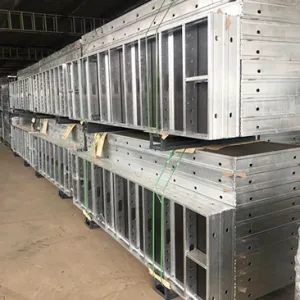
تصنيفها: Light Duty Steel Formworkالمشاهدات: 9عدد:وقت الإصدار: 2026-09-28 19:27:49Concrete Formwork provides reliable solutions for forming walls, slabs, columns, and structural elements in construction projects. Designed for strength, dimensional accuracy, and repeated use, concrete formwork systems help improve jobsite efficiency and concrete quality. Custom configurations support different project requirements, construction methods, structural designs, and site conditions for contractors worldwide.
أخبار
تصنيف:
لا توجد نتائج بحث!
حالة
تصنيف:
لا توجد نتائج بحث!
فيديو
تصنيف:
لا توجد نتائج بحث!
تحميل
تصنيف:
لا توجد نتائج بحث!
تجنيد
تصنيف:
لا توجد نتائج بحث!
المنتجات الموصى بها
لا توجد نتائج بحث!



 هاتف
هاتف